TLD Electronics is a China-based fiber optic cable manufacturer and supplier providing standard and customized solutions for telecommunications, data centers, FTTH networks, industrial communication, security systems and commercial infrastructure.
Our fiber optic cable range covers single-mode and multimode constructions, with options for different fiber counts, cable structures, jacket materials, armoring and installation environments. We supply standard cables as well as OEM configurations for distributors, system integrators and network projects.
A fiber optic cable transmits data via light pulses through glass or plastic fibers. Compared with copper cables, it delivers higher bandwidth, longer transmission distances, and immunity to electromagnetic interference. Based on core diameter and propagation characteristics, it falls into two main types: single-mode (SMF, core ~9 µm, single light mode) – ideal for long-haul telecom and CATV; and multimode (MMF, core 50–100 µm, multiple modes) – suited for short-distance, high-speed data links in LANs and data centers.
Fiber Optic Cable is classified according to international standards to define its performance characteristics:
|
Classification |
Type |
Core Size |
Typical Application |
Key Characteristics |
|
OS1 |
Single-Mode |
9/125 µm |
Indoor/outdoor plant |
Tight-buffered, max attenuation 1.0 dB/km |
|
OS2 |
Single-Mode |
9/125 µm |
Outdoor/long-haul |
Loose-tube, low water peak, meets ITU-T G.652D |
|
OM1 |
Multimode |
62.5/125 µm |
Legacy networks |
Orange jacket, lower bandwidth |
|
OM2 |
Multimode |
50/125 µm |
Standard networks |
Orange jacket, improved bandwidth |
|
OM3 |
Multimode |
50/125 µm |
10 Gb/s networks |
Aqua jacket, laser-optimized |
|
OM4 |
Multimode |
50/125 µm |
10–40 Gb/s networks |
Aqua or magenta jacket, higher bandwidth |
|
OM5 |
Multimode |
50/125 µm |
SWDM applications |
Lime green jacket, wideband multimode |
This cable offers transformative advantages over traditional copper cables:
|
Advantage |
Fiber Optic Cable |
Copper Cable |
|
Bandwidth |
10 Gbps and beyond |
Limited by distance and frequency |
|
Transmission Distance |
Up to 100+ km (single-mode) |
Typically 100 meters (Ethernet) |
|
Signal Loss |
~3% over 100 meters |
~94% over 100 meters |
|
EMI Immunity |
Complete immunity |
Susceptible to interference |
|
Weight & Size |
Lighter and smaller |
Heavier and bulkier |
|
Durability |
Longer lifespan, no oxidation |
Prone to corrosion |
|
Maintenance |
Lower long-term costs |
Higher due to degradation |
|
Safety |
Non-conductive, no spark risk |
Conducts electricity |
We provide comprehensive certification, including: ISO 9001 , ISO 14001 , CE , RoHS , REACH , Test Reports.
When you choose us as your supplier, you receive full documentation to support your project’s quality and compliance requirements.
The cable is engineered with the following technical characteristics:
|
Parameter |
Typical Value |
|
Fiber Types |
G.652D, G.657A1/A2, OM1–OM5 |
|
Attenuation (SM) |
≤0.35 dB/km @ 1310nm, ≤0.22 dB/km @ 1550nm |
|
Attenuation (MM) |
≤2.8 dB/km @ 850nm, ≤0.8 dB/km @ 1300nm |
|
Operating Temperature |
-40°C to +70°C |
|
Storage Temperature |
-40°C to +75°C |
|
Jacket Materials |
PE (outdoor), LSZH (indoor), PVC, FRP |
|
Armoring Options |
Steel tape, corrugated steel, FRP, aramid yarn |
|
Water Blocking |
Dry water-blocking tape or flooded core |
Suitable for access networks, backbone links, fiber distribution and last-mile infrastructure.
OM3, OM4, OM5 and single-mode configurations are available for different data center and structured cabling requirements.
Fiber optic cables provide a non-conductive transmission medium for network links in environments where electromagnetic interference may be a concern.
Used for long-distance data and video transmission in surveillance networks and centralized monitoring systems.
Indoor fiber optic cables support office buildings, campuses, hotels, commercial facilities and other structured communication networks.
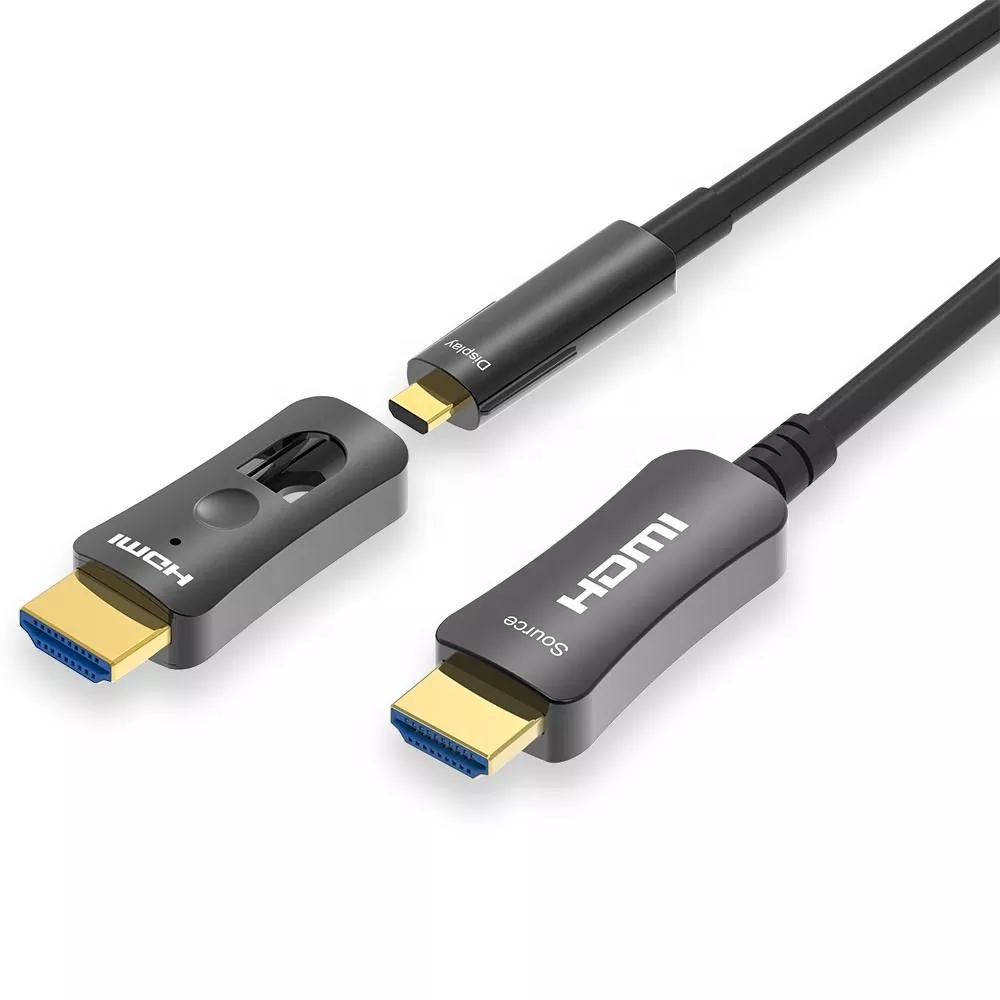

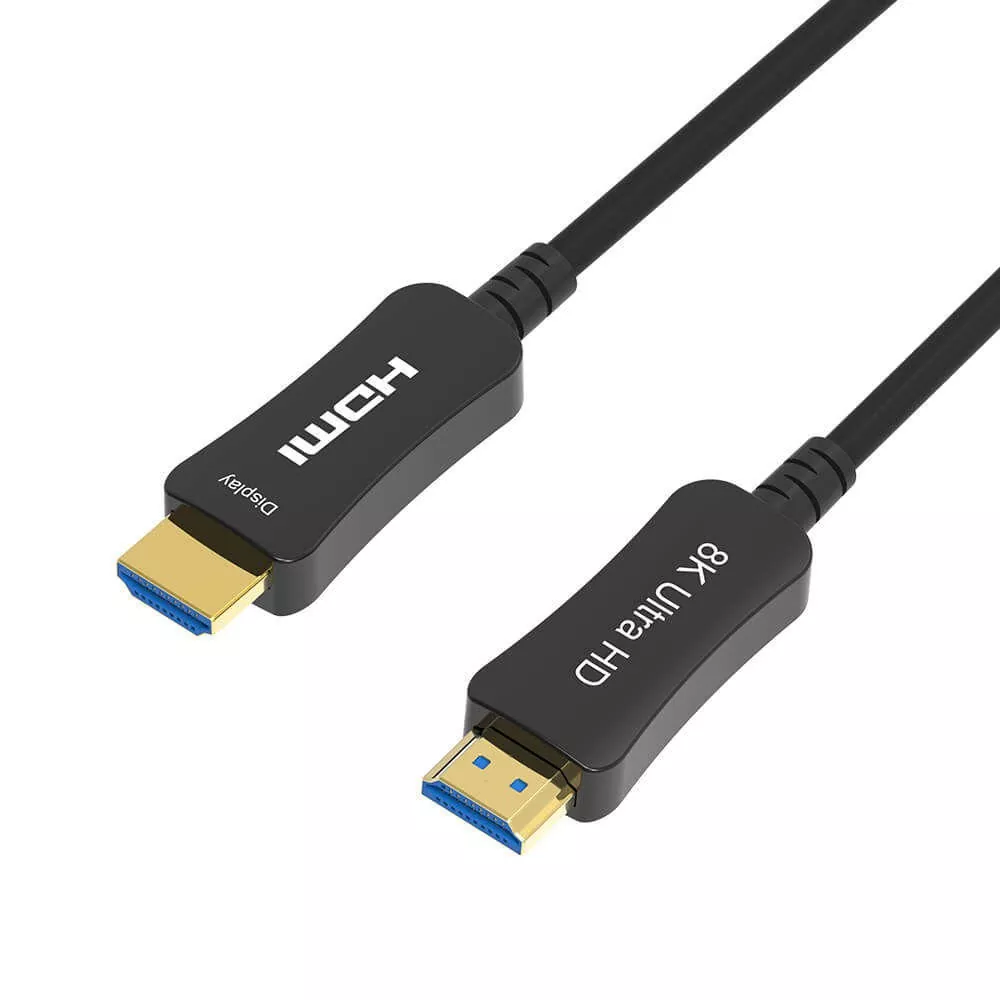
We provide OEM and customized fiber optic cable production for distributors, contractors and system integrators.
Customization can include:
· Fiber type and fiber count
· Cable structure
· Jacket material and color
· Armoring and water-blocking construction
· Cable length
· Connector configuration
· Printing and labeling
· Packaging
For pre-terminated cable assemblies, connector types such as SC, LC, ST, FC and MPO can be specified according to the application.
Our fiber optic cable production process includes material preparation, cable construction, jacket extrusion, connector assembly where required, and final inspection.
Fiber type and cable materials are selected according to the specified product configuration.
Strength members, water-blocking materials, armor and outer jackets are applied according to the intended installation environment.
For pre-terminated products, connectors are assembled and the fiber end faces are finished and inspected according to the required specification.
Testing can include optical performance, continuity, connector condition, mechanical performance, dimensions, appearance and packaging inspection according to product and project requirements.
|
Plastic Reels |
For indoor/drop cables, lightweight and reusable |
|
Coils with Bags |
For short-length cables and patch cords |
|
Custom Packing |
Available per customer requirement |
Each cable reel includes a test report, specification sheet, and handling instructions.
Q1: What’s the meaning of Tensile Strength, Crush Resistance & Minimum Bend Radius in Fiber Optic Cable?
The mechanical performance of fiber optic cables directly affects installation and long-term reliability. Three key parameters matter most:
Tensile strength - the maximum pulling force the cable can handle during installation (short-term) and while in service (long-term). Typical values range from a few hundred to several thousand Newtons, depending on the cable design.
Crush resistance - the ability to withstand radial compression, measured in N/100mm. For outdoor cables, common standards are 2.0 kN/100mm (short-term) and 1.0 kN/100mm (long-term).
Minimum bend radius - the smallest radius you can bend the cable without harming signal transmission. With bend-insensitive fibers (G.657), this can be as low as 5× cable diameter under static conditions and 10× under dynamic conditions.
Q2: What colors are available for it?
Standard color is black, if you need other colors, it can be custom-maded.
Q3: How to connect Fiber Optic Cables & Fiber Optic Cable Fittings?
The connections are achieved through three primary technologies:
A. Fusion Splicing - The gold standard for connection. A fusion splicer uses an electric arc to melt and permanently join two fiber ends, creating a continuous connection with minimal loss. Fusion splicing is the preferred method for single-mode Fiber Optic Cable and offers the lowest insertion loss and highest reliability.
B. Mechanical Splicing - A temporary or field-expedient method where fibers are aligned and held together with a mechanical fixture and index-matching gel. This method is often used for multimode Fiber Optic Cable or emergency restoration.
C. Connector Termination – The ends are terminated with connectors (SC, LC, ST, FC, etc.) for plug-and-play connectivity to equipment or patch panels. Splice-on connectors (SOCs) combine factory-polished connectors with fusion splicing for field termination.
Q4: How do you connect it to other cables, such as copper cable?
Connecting it to copper cables requires media converters or optical transceivers that convert optical signals to electrical signals and vice versa. These devices take the optical output from it and translate it into protocols (Ethernet, RS-485, etc.) compatible with copper cabling. TLD does not manufacture copper cables but can recommend compatible media conversion solutions for integrating it into hybrid networks.
To request your Fiber Optic Cable quotation or Price List, simply contact TLD with the following information:
Fiber type: Single-mode / Multimode
Core count: 2–288 cores or custom
Jacket material: PE / LSZH / PVC / FRP
Length: Total meters required
Application: Aerial / Duct / Direct burial / Indoor / Submarine
Destination port: For shipping calculation
Certification required: CE / RoHS / etc.
Send your inquiry to TLD’s sales team via email at sales06@tldcable.com or the company website www.tldcable.com. We will quote you within 12 hours.