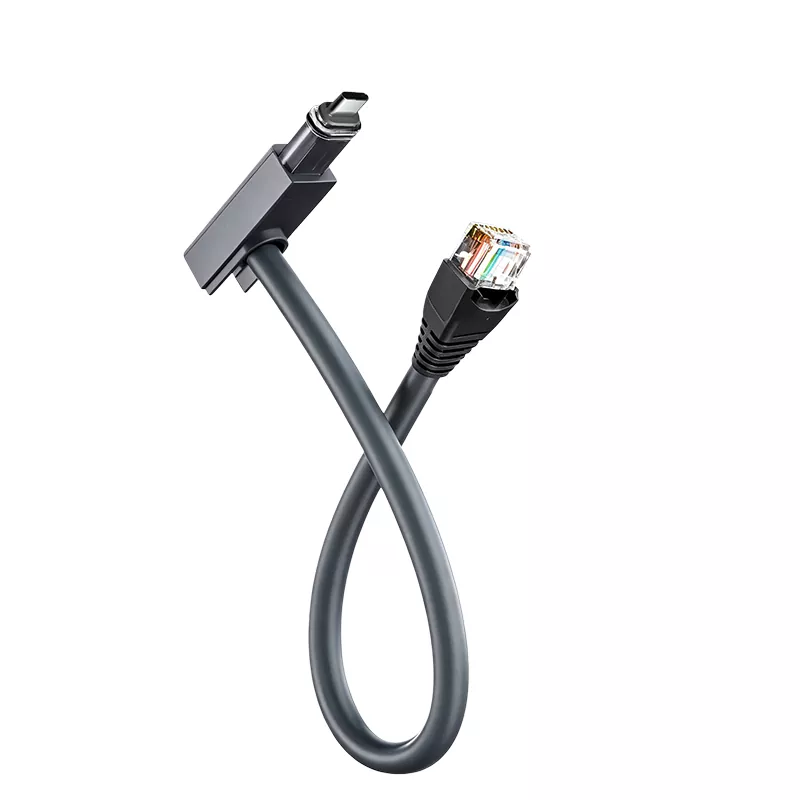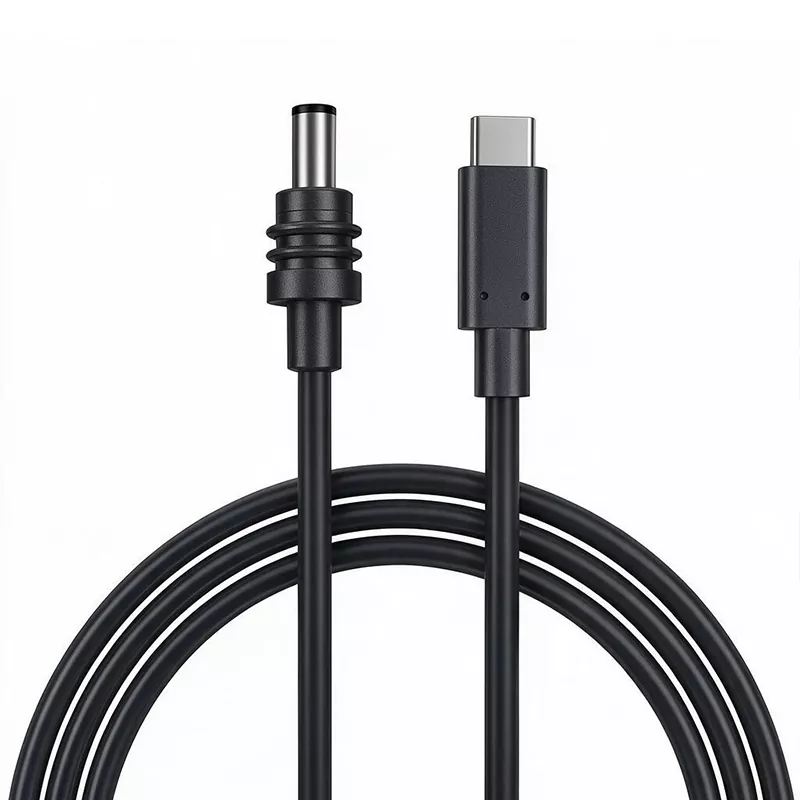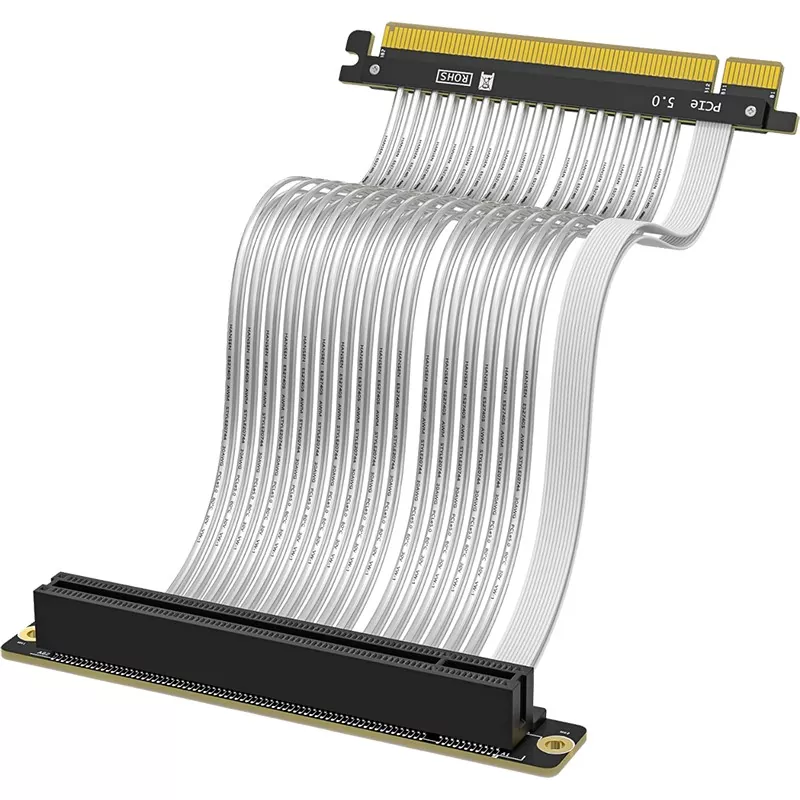
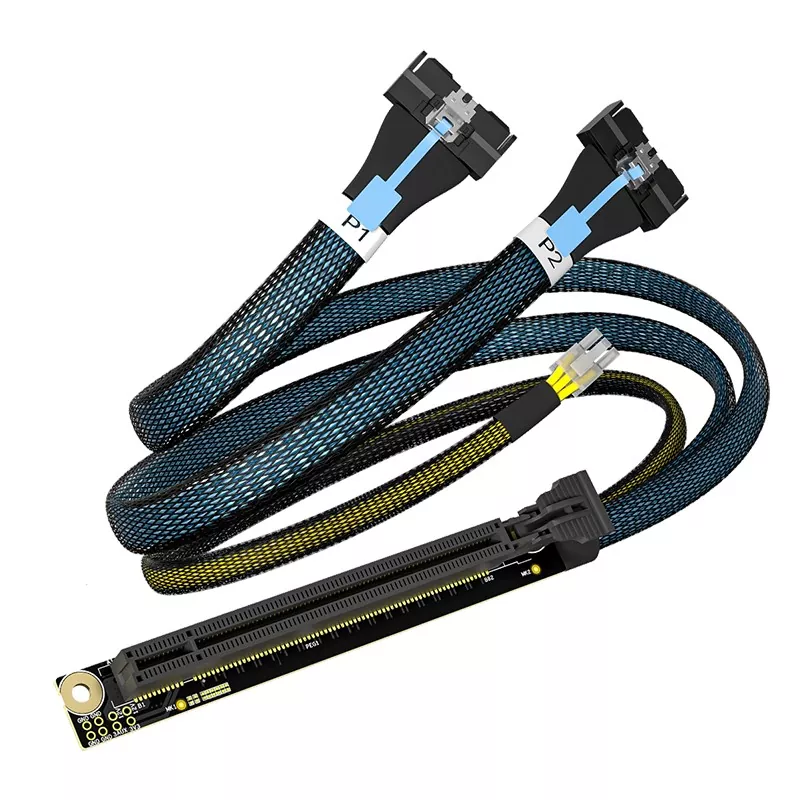

The PCIe X16 to 2*MCIO 8X Cable from TLD Electronic, a China cable factory in Guangdong, is built for servers and high-performance computing. It uses 30AWG wire, a standard PCIe X16 male interface, and two MCIO 8X connectors. Compliant with SFF-TA-1016, it enables point-to-point connections for NVMe storage and GPU cards, meeting PCIe 5.0 demands for signal integrity.
Output Rate: 32 GT/s (per lane), compliant with PCIe 5.0 specification
Lane Configuration: Input PCIe X16 (16 transmit/receive differential pairs), output two independent PCIe X8 (each MCIO 8X interface contains 8 differential signal pairs)
Impedance Control: 85 ± 5Ω (matching PCIe standard)
Slot Specification: PCIe X16 (male, standard keying, compatible with all PCIe slots)
Output Interface: Two MCIO 8X connectors
Wire Gauge: 30 AWG
Cable Length: OEM customized (common lengths 0.3 m, 0.5 m, 0.8 m, determined by internal server routing requirements)
Compatible Devices
Primary Compatible Devices: Graphics cards supporting PCIe X8 interfaces, including but not limited to NVIDIA A16, A40, RTX 6000 Ada, and AMD data center GPUs in x8 operating mode. Through MCIO 8X to graphics card PCIe gold finger adapter cards, single or multiple graphics cards can be driven (requires motherboard bifurcation configuration).
Other Compatible Devices: NVMe SSDs (U.2, E1.S, E3.S form factors), smart NICs (e.g., Mellanox ConnectX-6), FPGA accelerator cards, and RAID cards.
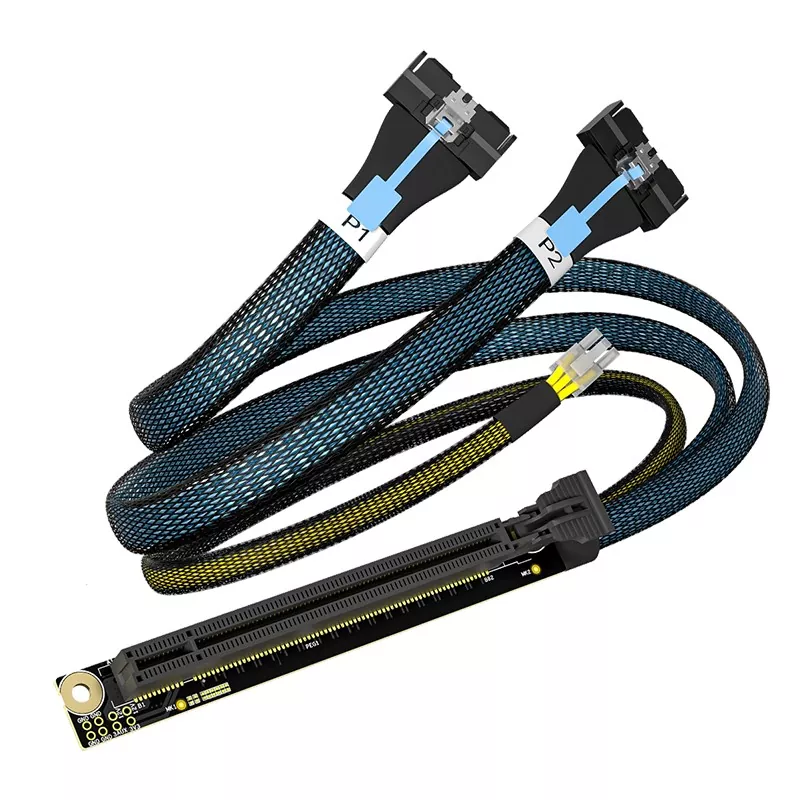
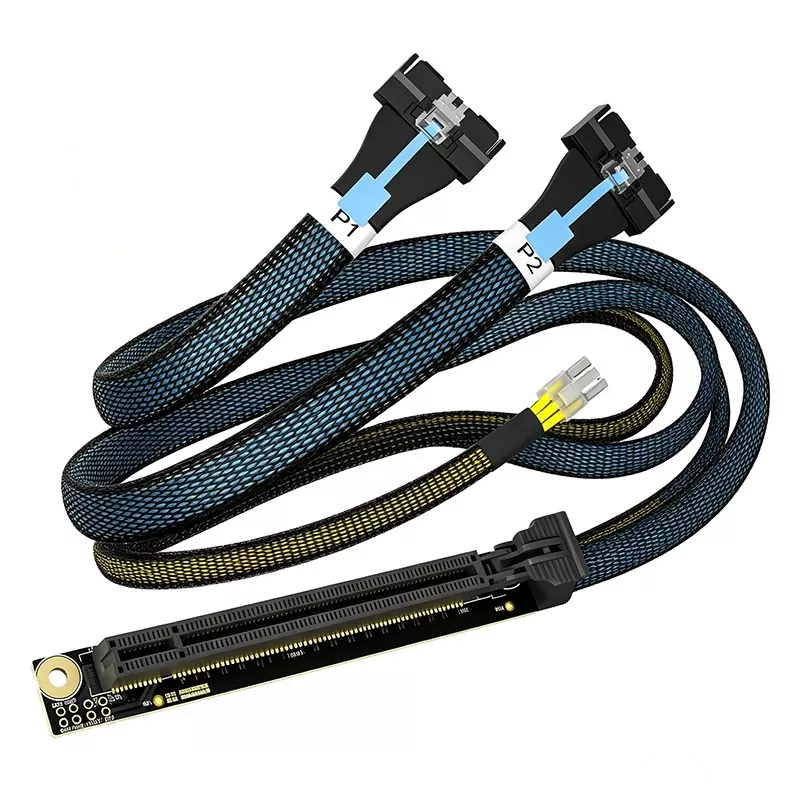
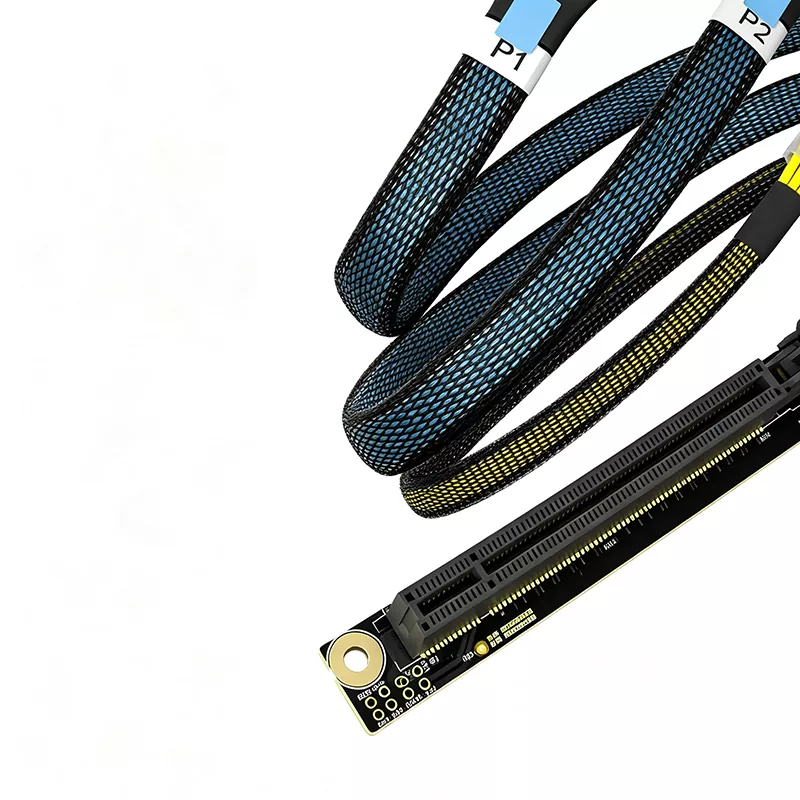
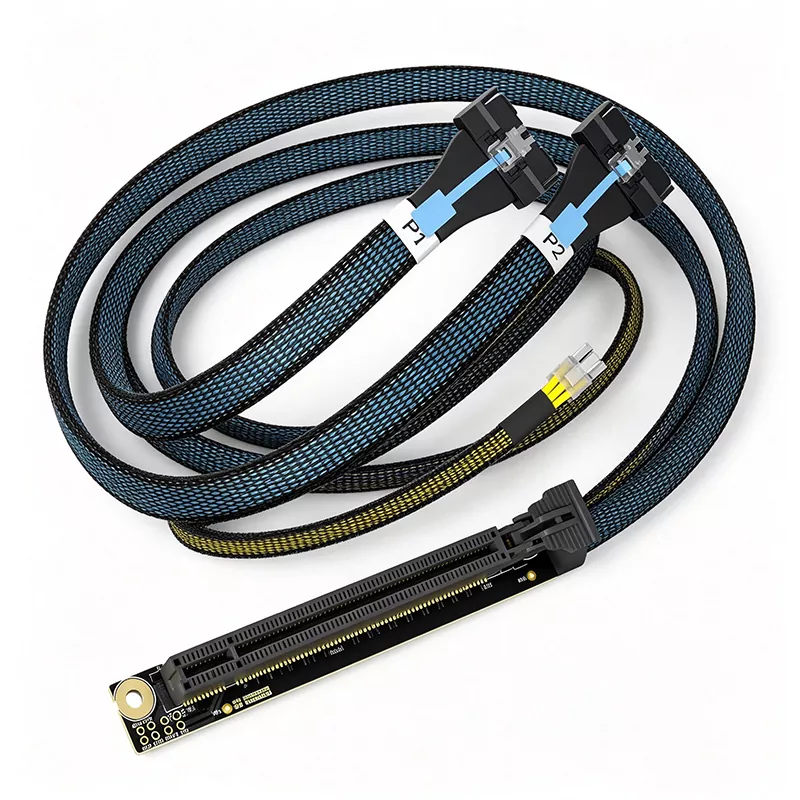
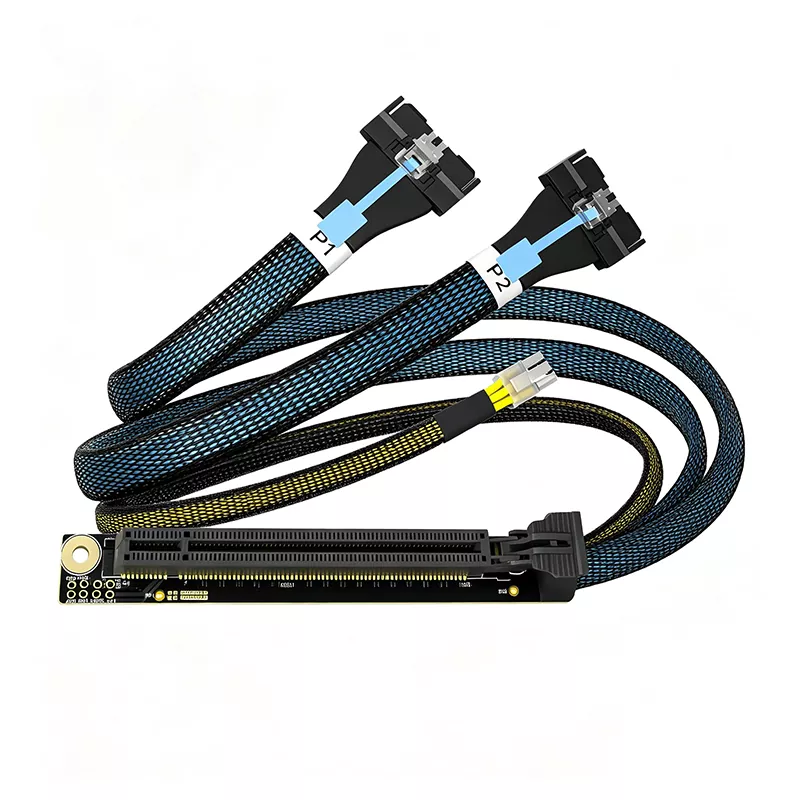
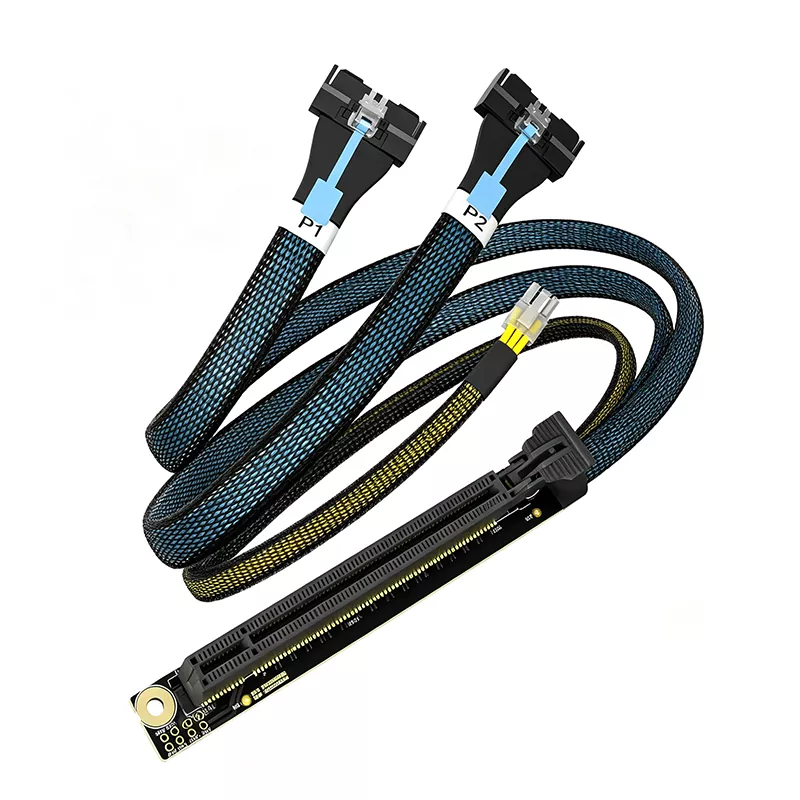
In a computing node with only a single PCIe X16 slot (e.g., a 1U server or compact workstation), insert this cable and connect the other end to two MCIO 8X to PCIe X8 adapter cards to drive two high-performance graphics cards, enabling parallel processing for AI inference or graphics rendering tasks without the need for expensive motherboard PCIe bifurcation cards.
A single PCIe X16 slot on the motherboard connects via this cable to two NVMe backplanes (each supporting x8 bandwidth), respectively mounting 2–4 U.2 SSDs to increase storage density. Due to the compactness of the MCIO interface, backplane design can be positioned closer to the drive trays, shortening high-speed signal paths.
In OCP open racks, compute nodes route two MCIO 8X signals to adjacent storage nodes or accelerator nodes via the PCIe X16 interface and this cable, utilizing PCIe P2P transmission capabilities to reduce CPU load.
Hardware engineers use this cable to split a PCIe X16 slot on a main test board into two x8 channels, connecting two logic analyzers or protocol analyzers respectively, facilitating simultaneous debugging of two independent signal paths.
The PCIe X16 to 2*MCIO 8X high-speed bifurcation cable is an ideal solution for flexible conversion from "single-wide channels" to "dual narrow channels" inside high-performance servers. It fully leverages the advantages of the MCIO interface in high density and low loss. Combined with 30 AWG high-frequency copper materials and rigorous impedance control, it maintains excellent signal integrity even at PCIe 5.0 speeds. Whether providing a streamlined interconnect path for dual-GPU systems or efficiently splitting bandwidth in storage servers, this cable helps system designers break through space and lane-count limitations without sacrificing reliability.
It splits a single PCIe x16 slot into two independent PCIe x8 links via two MCIO 8X connectors, allowing you to connect two GPUs, NVMe SSDs, or other high-speed devices from one x16 slot.
Yes, but your motherboard BIOS or CPU must support x16 bifurcation (usually x8+x8 mode). Without it, the cable will not split the lanes properly.
It is designed for PCIe 5.0 (32 GT/s per lane) and is backward compatible with PCIe 4.0, 3.0, 2.0, and 1.0.
You can connect GPUs, NVMe SSDs (U.2, E1.S, E3.S), smart NICs, FPGA cards, and RAID cards—provided you use the appropriate MCIO-to-device adapter.
Standard lengths are 0.3 m, 0.5 m, and 0.8 m, but OEM custom lengths are available to fit your server or workstation layout.
TLD supplies PCIe X16 to 2*MCIO 8X Cable for distributors, e-commerce sellers, AV suppliers, and project buyers.
For product samples, OEM requirements, customised packaging, or wholesale orders, contact TLD to confirm the required configuration and quotation.
TLD — HDMI, USB, SAS and AV Cable Manufacturer in Guangdong, China.




Address
NO.505, Tianhui Block, Fukang Community, Longhua Street, Longhua District, Shenzhen City,Guangdong province, China
Tel