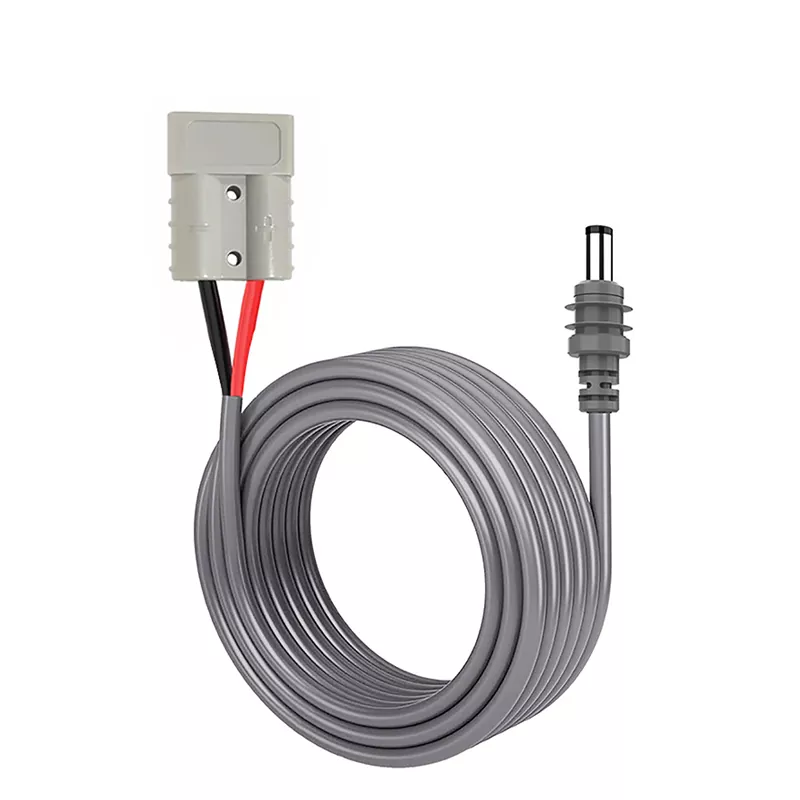
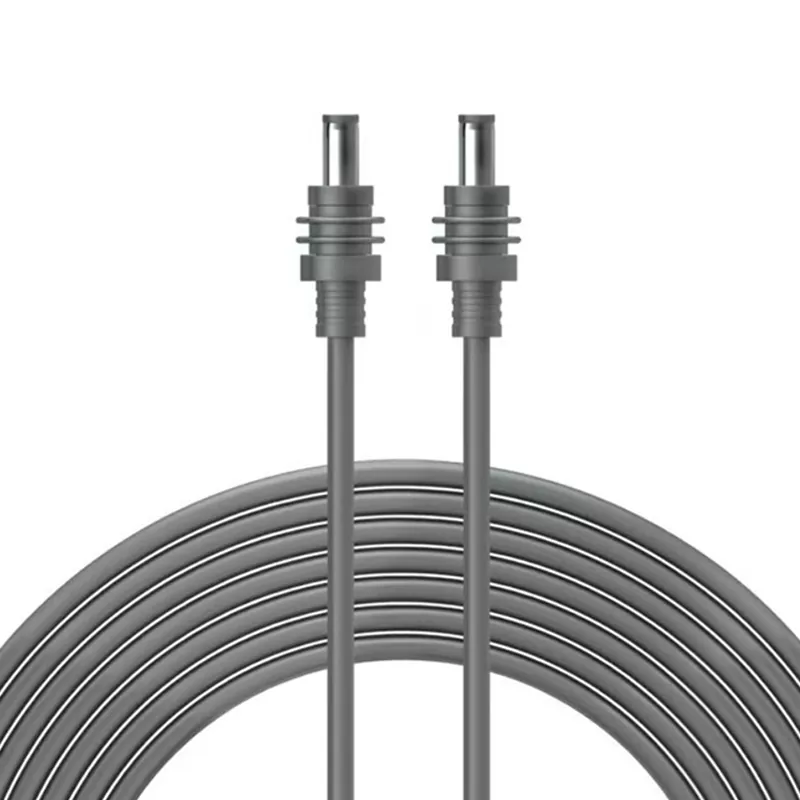
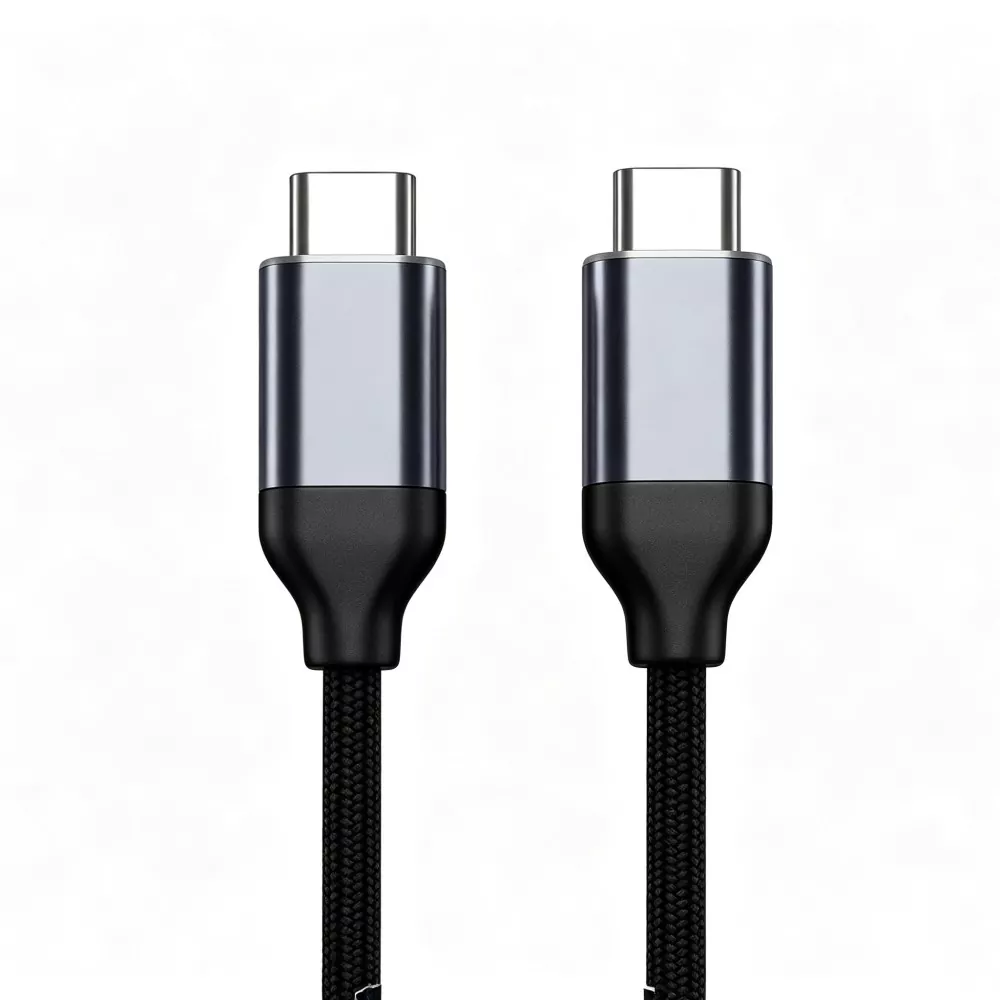
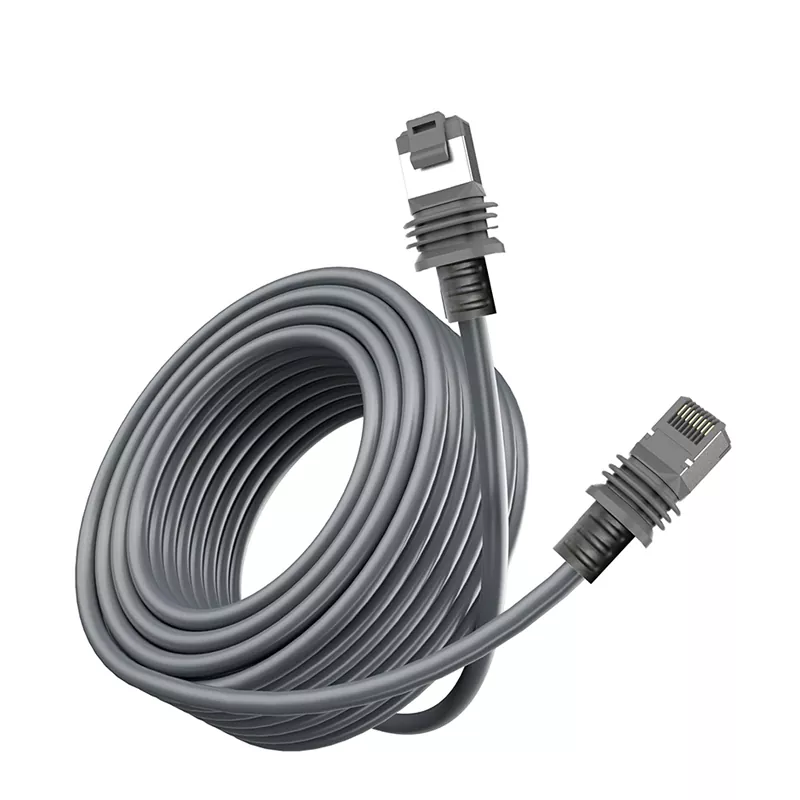
A Starlink DC male-to-female power cable gives you more freedom to position equipment and route power around walls, cabinets, roof entries, vehicle panels, and other obstacles. It extends an existing DC connection; it does not change the voltage, correct the polarity, or adapt one connector size to another.
That distinction matters. A cable that physically plugs in can still be electrically unsuitable. Before ordering a Starlink DC male-to-female power cable, confirm both connector interfaces, the required polarity, the source voltage, the equipment’s current requirement, and the total cable length in the power path.
It adds placement flexibility and cleaner routing—but does not convert voltage or connector type
The practical benefit is simple: the power source no longer has to sit immediately beside the powered equipment. You can keep a DC supply inside a cabinet, place equipment closer to a clear operating position, or route the cable through a more protected path instead of stretching it across a doorway or sharp edge.
A correctly specified extension can also make installation and servicing cleaner. A male connector at one end and a matching female connector at the other preserve the existing connection format, allowing the extension to be inserted without cutting and splicing the original cable.
It is still only an extension. It cannot replace a voltage converter, reverse an incorrect center polarity, or make incompatible barrel connectors work together. Avoid using connector appearance as the only compatibility test: similar DC plugs may have different inner diameters, outer diameters, contact depth, or fit.
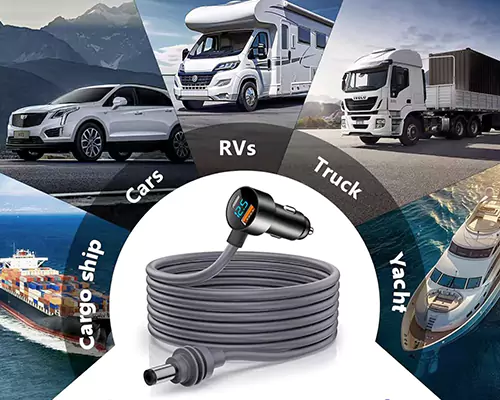
Where a DC power extension is useful in RV, vehicle, rooftop, off-grid, and portable installations
RV installations: Route power from a protected electrical compartment to the chosen equipment location without leaving the source or converter exposed in the living area.
Vehicle installations: Keep the power hardware in a secured compartment while running the extension along an existing cable path. The route must avoid hot surfaces, moving seat hardware, door seals, and abrasion points.
Rooftop routes: Add reach between an indoor power point and a roof-entry location. Outdoor sections and connector junctions need exposure-appropriate protection; a weather-resistant cable does not automatically make an uncovered connection waterproof.
Off-grid systems: Position equipment away from batteries, distribution panels, or other power components. The complete DC architecture—not the extension alone—must supply the required voltage and current.
Portable setups: Reduce awkward cable tension when equipment is moved between temporary locations. Repeated coiling, dragging, and connector handling make jacket durability and strain relief especially relevant.
These uses have different mechanical and environmental demands. A cable that stays inside an RV cabinet is not exposed to the same wear as one routed across a roof or unpacked every day.
Confirm compatibility before choosing a cable length
Identify the Starlink setup and measure both connector interfaces
“Starlink compatible” is too broad to approve a cable. Starlink-related DC installations can use third-party conversion equipment, power supplies, adapters, and custom wiring, so identify the actual devices on both sides of the proposed extension.
Measure the mating connector dimensions and confirm which side must be male and which must be female. If your installation calls for a size described as 5.5 mm × 2.1 mm or 5.5 mm × 2.5 mm, do not treat those descriptions as interchangeable. Verify the inner and outer dimensions against the equipment documentation or a known mating sample. Contact depth and mechanical retention also affect fit.
Match polarity, source voltage, current requirement, and the complete power architecture
Check the polarity marking on the source and receiving equipment before connection. A straight extension normally carries the existing polarity through; it does not repair a reversed or undocumented wiring arrangement.
The source voltage must already be suitable for the equipment, and every component in the path must support the required current. Review the power source, converters, fuses, adapters, connectors, extension cable, and load as one system. If any part is unidentified, stop and verify it rather than testing compatibility by plugging it in.
Length, conductor, jacket, and exposure determine whether the extension is suitable
Buy enough cable for the real route, including bends, service access, and strain relief—but not an unnecessary coil. Longer DC runs create more voltage drop, especially as current demand rises or conductor size decreases. The result can be unstable operation, failed startup, heating at weak connections, or equipment receiving less voltage than expected.
Ask the supplier to recommend the conductor material and cross-sectional size for the requested length and electrical load. “Heavy duty” is not a useful specification. You need the actual construction proposed for your order and confirmation that it is appropriate for the intended current and route.
Jacket choice depends on installation conditions. TLD Electronics lists PVC and TPU jacket options, but the material name alone does not settle the decision. Tell the manufacturer about bending, abrasion, temperature, sunlight, moisture, oils, and repeated handling so the offered construction can be evaluated against those conditions.
For exposed installations, define what “weather resistant” must cover. Ask whether the stated protection applies to the cable jacket, molded connector ends, or the complete mated assembly. If ingress protection is offered, request the rating for the exact ordered configuration and any installation conditions required to maintain it.
Evaluate TLD Electronics options for individual orders and repeatable OEM supply
TLD Electronics is a China-based cable manufacturer serving individual users, installers, resellers, OEM customers, and bulk purchasers. Its custom-length Starlink DC power cable options include selectable connector sizes, conductor materials, cable lengths, PVC or TPU jackets, optional weather-resistant configurations, and OEM packaging.
Those choices are useful only when the approved specification is recorded clearly. For repeat orders, use a drawing, part number, or controlled specification that identifies the construction. A product name and cable length alone leave too much room for variation.
Include connector size, custom length, conductor, PVC or TPU jacket, weather resistance, packaging, and quantity in the RFQ
A useful request for quotation should state:
Male and female connector dimensions, orientation, and any required mating details
Polarity and the pin or contact assignment
Source voltage, expected current, and connected equipment
Finished cable length and any length tolerance you need
Requested conductor material and size, or enough load information for a recommendation
PVC or TPU jacket preference and the actual installation environment
Indoor, outdoor, vehicle, rooftop, or portable use
Required weather or ingress-protection configuration
Labeling, OEM packaging, quantity, and repeat-order requirements
For a small order, this prevents a connector mismatch. For OEM or bulk Starlink DC extension cables, it also gives purchasing and quality teams a specification they can compare across samples and production lots.
Verify test records and product-specific compliance documents before relying on certification claims
Do not rely on a certification logo, marketplace description, or broad statement about factory capability. Ask which tests apply to the exact cable configuration you are buying and request the relevant records. Connector type, conductor construction, jacket material, cable length, and ingress-protection options can affect which evidence is applicable.
If your market or application requires specific compliance documentation, name that requirement in the RFQ. Confirm that the document covers the finished product—not merely a raw material or a different cable family—and review sample approval requirements before authorizing a production run.
Final order check: setup, connectors, polarity, voltage, current, length, route, environment, and supplier documentation
Identify the Starlink-related equipment, DC source, converters, and adapters in the full power path.
Confirm the exact male and female connector dimensions and mating direction.
Verify polarity from reliable device documentation or an approved wiring record.
Confirm that the source voltage and available current match the connected equipment.
Measure the routed length, including bends and service slack, without adding an avoidable coil.
Check the proposed conductor construction for current capacity and voltage drop over the full run.
Choose the jacket and protection level for the actual exposure, including connector junctions.
For repeat or regulated orders, approve a sample and verify product-specific test and compliance records.
We use cookies to offer you a better browsing experience, analyze site traffic and personalize content. By using this site, you agree to our use of cookies. Privacy Policy