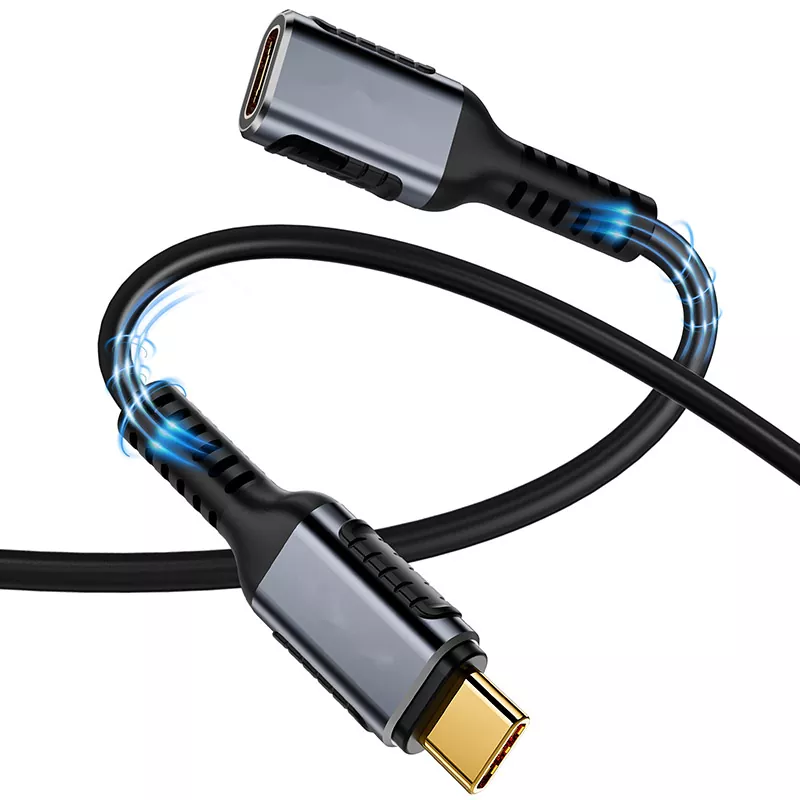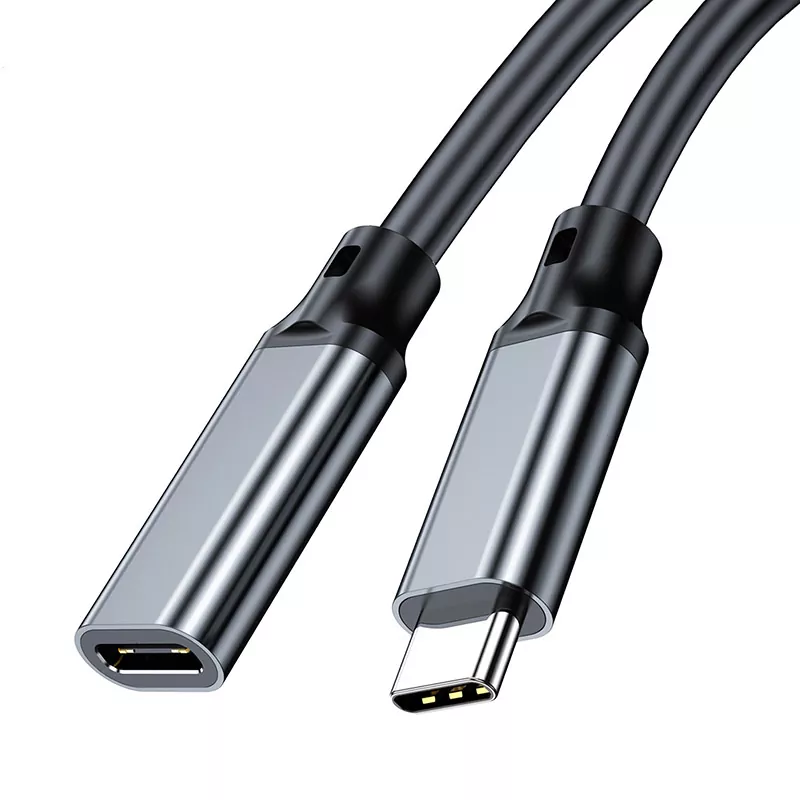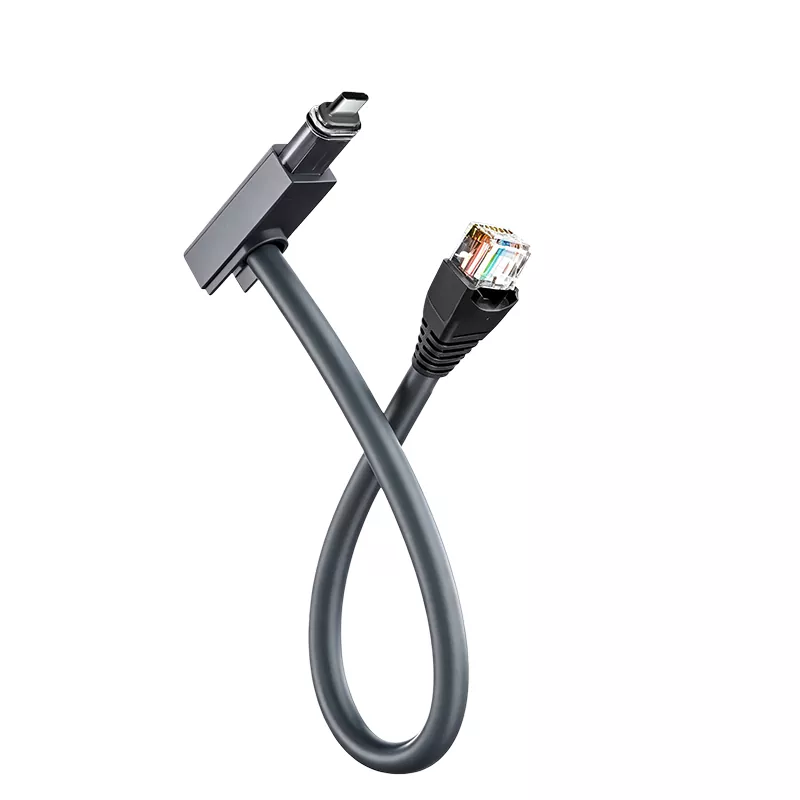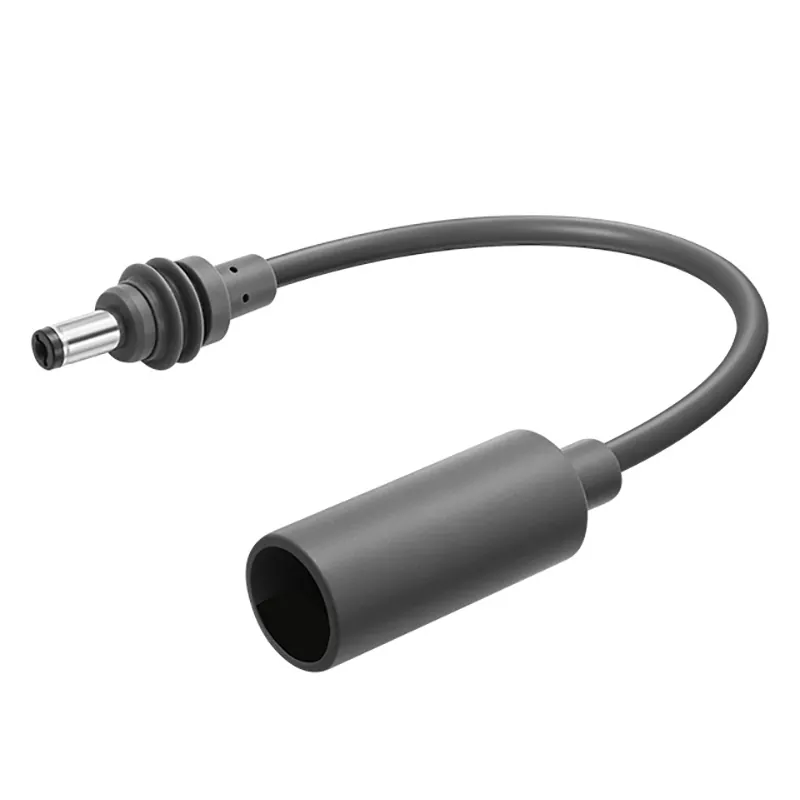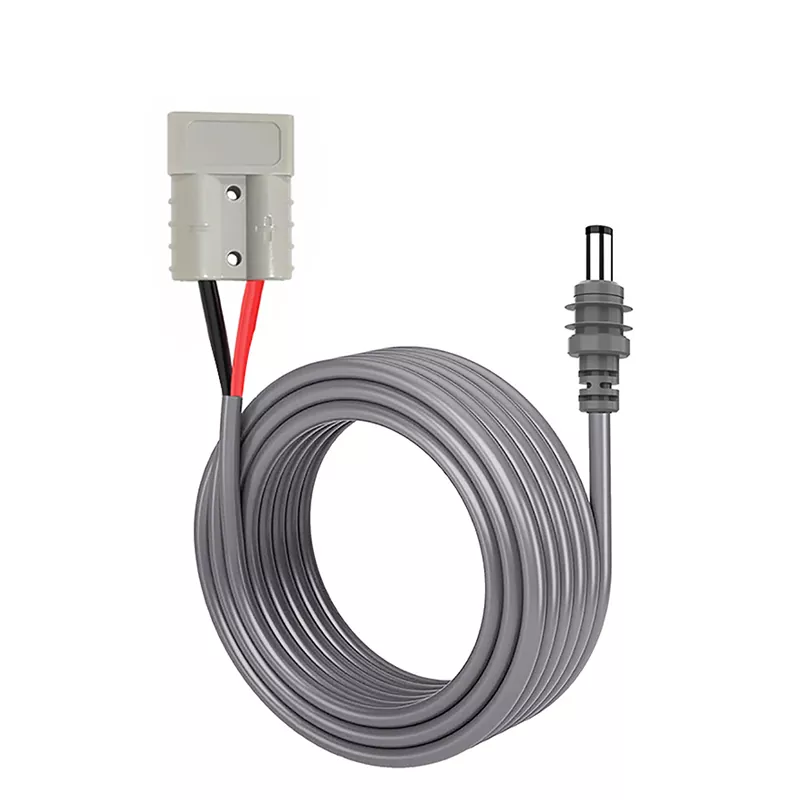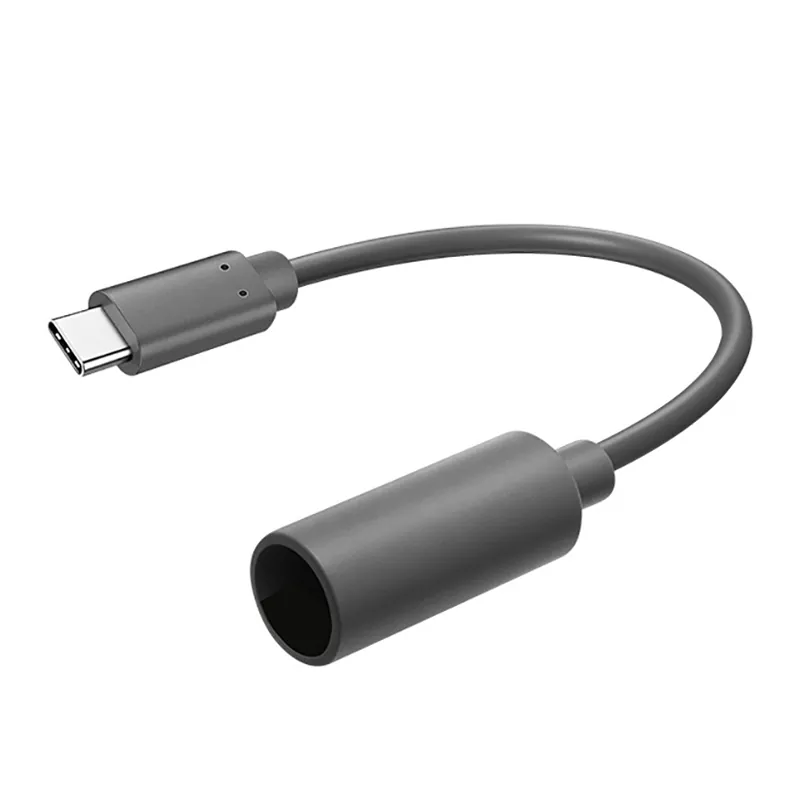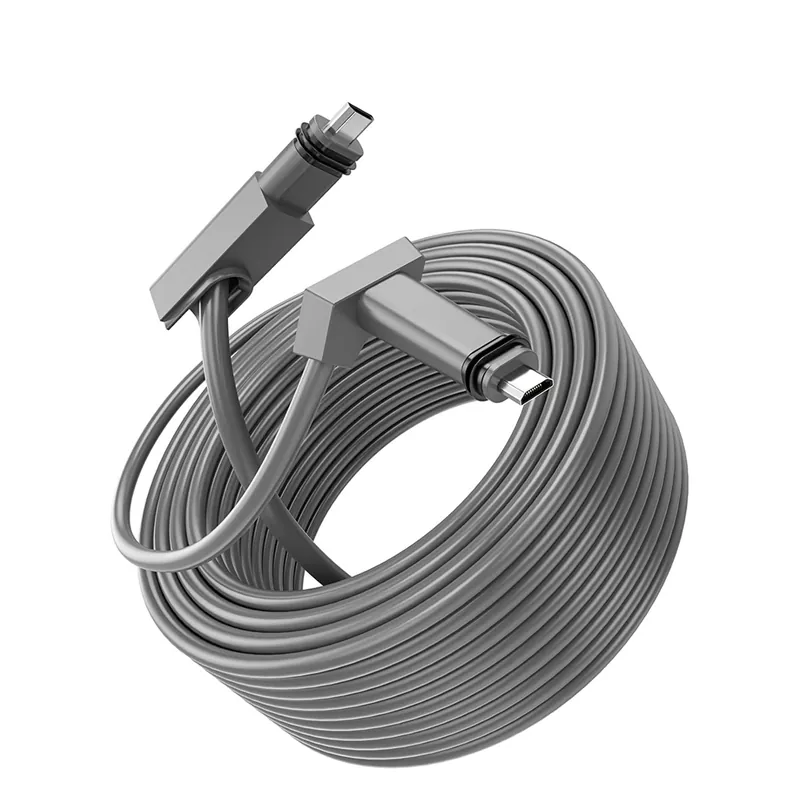
TLD is a professional USB Extension Cable manufacturer in China , providing extension solutions for consumer electronics, commercial equipment, industrial applications and OEM projects.
Our USB Extension Cables are designed to bridge distance gaps without compromising signal integrity or power delivery, supporting USB-A, USB-C, Micro USB and customized connector assemblies. With both passive and active repeater designs available, TLD supplies USB Extension Cables for system integrators, industrial buyers, and brand customers who need reliable reach beyond the standard cable length.
We support different requirements in extension length, connector gender combination, signal amplification, jacket material, color, packaging and branding. Our manufacturing capabilities cover small trial orders as well as large-volume production.
A USB Extension Cable is a male-to-female cable that adds reach between a host device (laptop, charger, hub) and a USB peripheral without requiring a direct port-to-device connection. Unlike a standard data/charging cable, an extension cable must preserve signal timing and voltage levels across the additional length—a challenge that grows with distance and USB generation. TLD manufactures USB Extension Cables in both passive configurations for short runs and active repeater configurations with built-in signal regeneration circuitry for longer reaches. Every cable is built with precision conductors, controlled impedance and shielding to maintain USB specification compliance across the intended extension distance.
USB specifications limit passive cable length because signal attenuation increases with distance. The practical thresholds are widely recognized in the industry:
USB 2.0 passive extension: typically reliable up to approximately 5 meters (16 ft) before signal integrity becomes marginal.
USB 3.x passive extension: typically limited to around 3 meters (10 ft); beyond this, an active extender is the appropriate engineering choice.
Active USB Extension Cables incorporate a repeater chip (and in some designs, auxiliary power) to regenerate the USB signal, allowing reaches well beyond passive limits—commonly 10 m, 15 m, and in daisy-chained or CAT/fiber-based configurations, substantially farther.
|
Extension Type |
Typical Max Reach |
Best Fit |
|
Passive USB 2.0 Extension |
~5 m |
Keyboards, mice, low-bandwidth peripherals; cost-sensitive runs |
|
Passive USB 3.x Extension |
~3 m |
Short desktop extensions where full SuperSpeed is not critical |
|
Active USB 3.x Repeater Extension |
10–15 m+ (daisy-chainable in some designs) |
External drives, webcams, industrial cameras, POS systems requiring stable 5 Gbps |
An extension cable is not simply a longer data cable. The table below highlights the performance dimensions that differentiate a purpose-built extension cable from a standard cable used as a makeshift extender.
|
Performance Metric |
Standard USB Data Cable Used as Extension |
TLD USB Extension Cable (Passive/Active) |
|
Signal integrity at length |
Not characterized for extension; timing margin degrades rapidly |
Controlled impedance and shielding tuned for stated extension length |
|
Connector configuration |
Male-to-male; requires adapter or gender changer |
Male-to-female, plug-and-play |
|
Voltage drop at distance |
Uncontrolled; high-resistance conductors exacerbate drop |
Low-resistance conductors (≤0.08 Ω/m typical for 26 AWG) to minimize voltage loss |
|
EMI rejection |
Consumer-grade foil-only shielding often inadequate |
Foil + braided shielding; active models with localized filtering |
|
Reach beyond 3–5 m |
Not recommended without active hardware |
Passive for short runs; active repeater built into connector housing for longer runs |
USB Extension Cables use standard plug-and-play mating: the male end connects to the host port or existing cable, and the female end accepts the peripheral. No welding or termination is required at the point of use. For permanent or semi-permanent installations—rack cabinets, kiosks, industrial enclosures, and behind-wall routing—TLD supplies panel-mount extension adapters, locking connector shells, and strain-relieved junction housings to secure the extension point against vibration and accidental disconnection. Active models are typically bus-powered; where peripheral power demand exceeds the host port’s budget, TLD can integrate an auxiliary power input or specify a powered-hub-compatible design.
1. Signal Integrity Across Distance
Conductor gauge, pair geometry and shielding are selected according to the target USB generation and extension length, reducing attenuation and timing jitter that cause dropouts or speed negotiation failures.
2. Passive and Active Configurations
Passive extension cables for short, cost-sensitive runs; active repeater cables with signal regeneration circuitry for reaches that exceed passive USB limits—without requiring the end user to add external hardware.
3. Durable Construction for Repeated Mate/Unmate
Reinforced strain relief, nickel- or gold-plated contacts, and TPE/TPU jacket options support daily connect/disconnect cycles in commercial and light industrial environments.
4. Flexible OEM Customization
TLD supports customization of:
Extension length
Connector combination (USB-A male to A female, C male to C female, A-to-C extension, panel-mount variants)
Active or passive architecture
Jacket material and color (black, white, grey and custom Pantone-matched colors)
Logo printing, over-mold branding and packaging design
|
Parameter |
Typical Value |
|
Conductor resistance (26 AWG, extension-grade) |
≤0.08 Ω/m |
|
Differential impedance (USB 3.x pairs) |
90 Ω ± 10% |
|
Shielding |
Aluminum foil + braid (active models: additional localized filtering) |
|
Operating temperature |
-40°C ~ +85°C (TPE/TPU jacket options) |
|
Mating cycles |
≥5,000 (reinforced connectors) |
|
Active repeater power |
Bus-powered; auxiliary power option available on request |
TLD’s engineering team also offers customized USB Extension Cables with ferrite chokes, LED power/activity indicators, screw-locking connector shells, and over-molded strain relief tailored to the installation environment.
As a USB cable factory in China, TLD provides complete production services for extension cables, from conductor preparation to final inspection.
Manufacturing Process
Wire preparation and conductor processing — Copper conductors are drawn and bunched to gauge specifications that keep voltage drop within budget across the extension length.
Insulation and pair geometry — Dielectric materials and twist lay are controlled to maintain the differential impedance required for USB 2.0 or USB 3.x signal integrity.
Shielding and assembly — Foil and braid shielding are applied according to the extension type; active models integrate repeater PCB assembly in the female connector housing.
Connector over-molding — Male and female ends are molded with strain relief profiles suited to the cable diameter and expected handling.
Electrical and appearance inspection — Each batch is tested for continuity, insulation resistance, signal pass/fail at rated speed, and appearance before shipment.
Q1: Can you customize USB Extension Cables according to customer requirements?
Yes. TLD provides OEM customization including extension length, connector type and gender combination, active/passive architecture, jacket material, color, logo and packaging.
Q2: How do I choose between passive and active USB Extension Cable?
As a working rule, USB 2.0 passive extensions are typically suitable up to about 5 m, and USB 3.x passive extensions up to about 3 m. Beyond those thresholds, an active repeater extension cable is recommended to maintain stable data transmission and avoid speed downgrades or intermittent disconnections.
Q3: Does TLD provide samples before bulk production?
Yes. Samples can be provided for design verification—including signal integrity testing at the intended extension length—before mass production.
Q4: What industries use TLD USB Extension Cables?
TLD USB Extension Cables are used in security and surveillance, point-of-sale systems, industrial control cabinets, remote desktop deployments, kiosk and digital signage, and enterprise computing environments where the host and peripheral cannot be co-located.
Q5: Which raw materials does TLD adopt for USB Extension Cables?
TLD sources primary materials from established suppliers: copper wire, PE/PVC/TPE/TPU insulation and jacket compounds, and gold-plated or nickel-plated connector contacts. Active repeater models use qualified repeater ICs selected for the target USB generation and extension length.
Q6: Which standards does it comply with?
USB Extension Cables are manufactured to: USB 2.0 / USB 3.2 Gen 1 electrical specifications, UL 2725, RoHS, REACH, and ISO 9001:2015 quality management system. For export, we can customize to EN, JIS, or GB/T standards per destination.
Q7: What certificates can TLD provide?
TLD supplies certification packages including UL, CE, RoHS/REACH, and flammability rating (VW-1, FT-1) certification. Active repeater models can be supplied with USB-IF compliance test reports where applicable. Every batch is accompanied by a traceable certificate of conformance.
Q8: What are the packing methods?
Retail: color blister cards with hang holes or premium gift boxes. Bulk: 100 pcs per PE bag, 10 bags per export carton (customizable). Customized: logo on the over-mold and packaging.
To get a quick quotation for USB Extension Cables:
Visit our official website www.tldcable.com and advise the USB generation (USB 2.0 / 3.x), required extension length, connector configuration (A-to-A female, C-to-C female, A-to-C, panel-mount), passive or active preference, quantity, and target market.
Email our sales team at sales06@tldcable.com with your technical drawing or target specifications. Please specify whether you need stock extension cables for immediate delivery, bulk order with OEM branding, or a customized length/active configuration. We will reply within 2 hours on business days—and we offer free samples for qualified projects.