
Yes—if you’re building a short copper channel, your equipment supports the intended Ethernet rate, and the complete shielded link is installed correctly. It’s usually a poor use of budget for long office runs, 1Gbps access ports, or any channel beyond Cat8’s 30-meter limit.
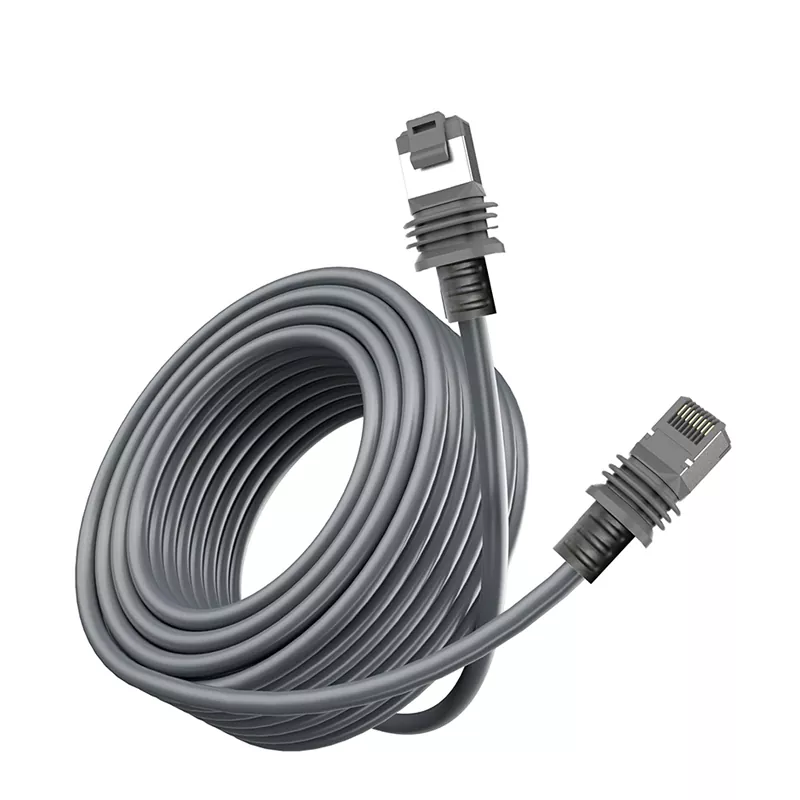
TLD Electronics supplies an RJ45 Cat8 shielded Ethernet patch cable described as four-pair S/FTP, tested up to 2000MHz, and capable of data rates up to 40Gbps. Those figures don’t guarantee that every network will run at 40Gbps. Distance, port type, connectors, installation quality, grounding, and the ordered cable construction all matter.
Short answer: Cat8 fits short copper links when the equipment, channel, shielding and cable configuration support the target performance
Cat8 is most relevant when you need a high-speed RJ45 connection inside a rack, between nearby racks, or in another controlled short-link installation. Start with the ports. A Cat8 cable can’t turn a 1GbE, 2.5GbE, 5GbE, or 10GbE port into a 40GbE port; the two connected devices must support the same target Ethernet standard.
Then check the full channel—not just the patch cord. Couplers, jacks, patch panels, equipment interfaces, and any other cable segment can become the limiting component. Backward compatibility lets a Cat8 patch cable connect to lower-category RJ45 equipment, but the link will operate at the capability negotiated by the connected hardware and supported by the weakest channel component.
40Gbps and 2000MHz describe different capabilities—and neither removes the 30-meter Cat8 channel limit
Data rate and tested frequency aren’t interchangeable specifications. The 40Gbps figure describes a potential network data rate. The 2000MHz figure refers to the frequency range used to evaluate category-related transmission performance. A higher frequency number doesn’t mean a device will automatically transfer data at 40Gbps.
Cat8’s standard channel reach is up to 30 meters. Treat that as a channel boundary, not permission to order a 30-meter patch cord without reviewing the rest of the link. The channel can include patch cords, connecting hardware, and installed cable. If your route is longer, change the architecture rather than assuming a premium patch cable will overcome the distance.
Separate Cat8 category capabilities from test results for the exact ordered length and construction
Category-level language tells you what Cat8 is designed to support under defined conditions. Purchase approval should depend on evidence for the cable you’re actually ordering: its length, conductor type, jacket, connectors, and production configuration.
Ask what “tested to 2000MHz” means in the supplier’s documentation. Useful records identify the test method, measured parameters, sample configuration, and pass criteria. A generic product-family statement is less informative than a report tied to the ordered construction or a representative production sample.
S/FTP shielding depends on compatible connectors, network hardware and a properly grounded installation
S/FTP construction typically uses foil around the individual pairs plus an overall braided shield. This controls electromagnetic interference and pair-to-pair interaction, but the shield must remain electrically continuous through compatible shielded plugs, jacks, panels, and equipment.
Grounding is an installation issue, not a cable-label feature. An incomplete or poorly planned bonding path can leave the shield ineffective and may contribute to unwanted current paths. Have the grounding and bonding design reviewed against the site’s electrical requirements. Don’t mix shielded cable with unshielded connecting hardware and assume the finished channel retains the intended shielding performance.
Choose Cat8, Cat6a or fiber according to link distance, port type and network architecture
| Option | Best fit | Main limitation to check |
|---|---|---|
| Cat8 | Short, high-speed copper links using compatible RJ45 equipment | 30-meter channel limit and shielded-channel installation requirements |
| Cat6a | 10Gbps copper channels up to 100 meters under the applicable standard | Not the category specified for 25GBASE-T or 40GBASE-T |
| Fiber | Longer links, switch uplinks, and architectures already using optical ports | Requires matching transceivers, fiber type, connectors, and cleaning practices |
Cat6a is often the more practical choice when the network tops out at 10Gbps and needs conventional horizontal cabling distances. Fiber makes more sense when the run exceeds Cat8’s reach or the switches already provide optical uplinks. Don’t select Cat8 solely because its category number is higher.
Where an RJ45 male-to-male Cat8 patch cable is practical—and where it adds little value
A male-to-male Cat8 patch cable is practical for direct equipment connections, switch-to-patch-panel links, and short data-center rack cabling where both ends use compatible RJ45 interfaces. Factory-terminated cords can also reduce the variability associated with terminating high-frequency balanced copper cable on site.
It adds little functional value on an internet router with 1GbE ports, a workstation connected through a 1GbE switch, or a long building run that exceeds the category’s channel limit. Cat8 also won’t correct damaged connectors, excessive bend stress, poor routing beside power conductors, or mixed-category channel components.
For frequently moved cords, flexibility and strain relief deserve attention. For fixed routing, conductor construction and installation rules may point to a different build. The right answer depends on how the cable will be handled, not just the number printed on its jacket.
Define the cable build before requesting a sample, bulk price or OEM quotation
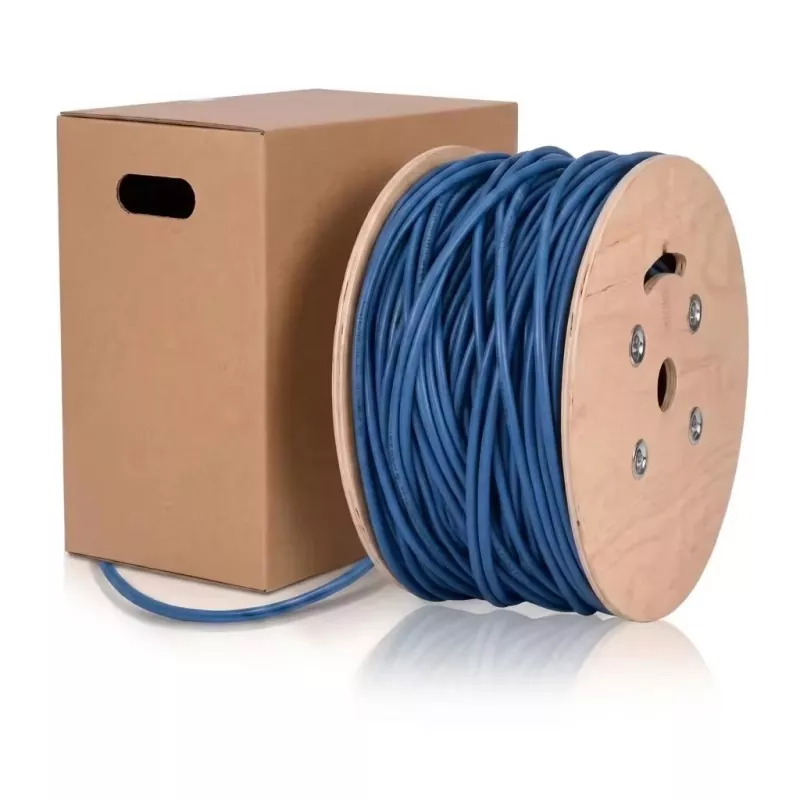
A useful RFQ describes one build clearly. “Cat8 cable, best price” invites assumptions about length, conductor construction, jacket rating, packaging, and testing. Those assumptions can produce a sample that doesn’t match the later production order.
Confirm length, solid or stranded bare copper conductors, PVC, CMR, CMP or LSZH jacket, installation environment, quantity, packaging and testing requirements
TLD Electronics lists solid or stranded bare copper conductor options and PVC, CMR, CMP, or LSZH jackets for this product category. These choices aren’t cosmetic. Stranded conductors are commonly selected for flexible patching, while solid conductors are associated with less frequently moved cable constructions. Confirm which option is appropriate for the ordered assembly.
Jacket selection must follow the installation space and local code. CMP is associated with plenum spaces, CMR with qualifying riser applications, and LSZH with projects that specify reduced smoke and halogen emissions. A general PVC description isn’t a substitute for a required fire rating. Confirm acceptance with the project authority and request the applicable supporting documentation.
Your request for a custom-length or bulk Cat8 Ethernet cable should state:
- Finished cable length and allowable tolerance
- Solid or stranded bare copper conductors
- Jacket material, color, marking, and required rating
- Indoor environment, pathway type, and expected cable movement
- RJ45 plug and shielding requirements at both ends
- Order quantity, individual or bulk packaging, and labeling
- Required test records and sample-approval process
Approve the order only after reviewing configuration-specific test evidence, documentation and supply terms
For OEM or wholesale purchasing, compare the approved sample with the proposed production specification. Record the cable length, conductor build, jacket, connector, label, packaging, and test requirements in the purchase documents. Otherwise, a passing sample and the mass-production cable may represent different configurations.
Review how production units are tested and how lot traceability is handled. If a report references standards or certifications, verify its scope, issuing body, model coverage, and validity rather than relying on a logo in a sales document.
Ask TLD Electronics to confirm MOQ, sample availability, customization scope, lead time, warranty, US shipping terms and any applicable UL, CE, RoHS or management-system documents
None of these commercial or compliance details should be assumed. Ask for written confirmation of minimum order quantity, sample cost and timing, available customization, production lead time, warranty terms, Incoterms, freight responsibility, and delivery arrangements for the United States. Request only the regulatory, safety, environmental, or management-system documents applicable to the exact product and transaction.
Send TLD Electronics your channel distance, connected port types, installation environment, required jacket, conductor preference, quantity, and test-document needs through the Cat8 40Gbps 2000MHz shielded Ethernet patch cable page. That gives the supplier enough detail to confirm suitability and quote the intended build rather than a generic cable.